

Overthinking Effects on Body and Brain
Symptoms You Shouldn’t Ignore
TL;DR
Overthinking activates your stress response, raising cortisol and keeping your body in fight or flight mode. Over time, this can lead to symptoms that hinder how you function in daily life. While thoughtful reflection can be healthy, chronic rumination keeps the nervous system stuck on high alert. Learning to calm the body and interrupt mental loops helps reduce the long term physical effects of overthinking.
In This Article
How Overthinking Affects Your Body and Brain
Overthinking is often dismissed as a personality trait or a mental habit. People describe themselves as “just someone who thinks a lot” or assume that rumination is harmless because it happens quietly in their head. But overthinking is not just a mental pattern. It has measurable physical consequences that can affect your everyday life.
When thoughts loop without resolution, the body responds as if something is wrong. Stress hormones rise, muscles tighten, sleep is disrupted and energy drops. Over time, these effects compound. If you have ever felt physically drained after a day of worrying, replaying conversations, or analyzing every possible outcome, you are not imagining it. Your body was involved the entire time.
Understanding the effects of overthinking on the body and brain is essential if you want to reduce chronic stress before it becomes a long term health issue. Many people wonder what happens to your body when you overthink, especially when the stress feels constant. The answer is more physical than most expect.
Some of the links on this page are affiliate links. This means if you click on a link and make a purchase, Fresh Beauty Tips may earn a small commission, at no extra cost to you. We only recommend resources or tools we believe are helpful for keeping your mind growing and glowing.
What Happens in Your Body When You Overthink
When you overthink, your brain activates the stress response. This response, often referred to as fight or flight, evolved to protect you from danger. It prepares your body to act quickly by increasing heart rate, sharpening focus, and releasing stress hormones like cortisol and adrenaline.
The problem is that your nervous system does not differentiate well between a physical threat and a mental one. If you repeatedly imagine worst case scenarios, replay past mistakes, or anticipate conflict, your brain interprets those thoughts as potential danger. As a result, your body shifts into a heightened state of alertness.
In this state, cortisol levels rise and your sympathetic nervous system becomes activated. As a result, your breathing becomes shallower and your muscles subtly contract. Blood flow shifts toward systems needed for immediate action and away from systems like digestion and long term repair.
If overthinking is occasional, the body eventually returns to baseline. But, if it is constant, the stress response remains partially activated for extended periods. That is when physical symptoms begin to show.
Physical Effects of Overthinking on the Body
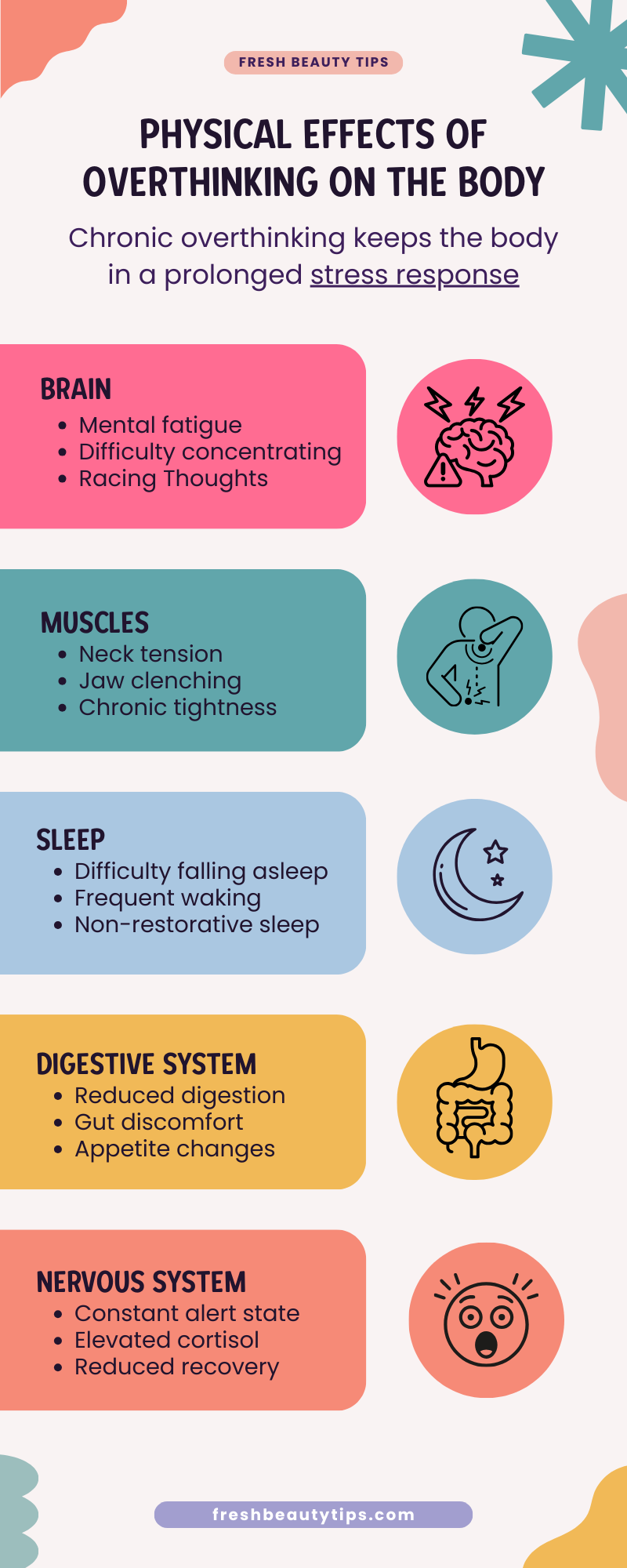
The physical impact of overthinking is not abstract. The overthinking effects on body systems are real, measurable, and often uncomfortable.
Headaches and Muscle Tension
Chronic mental stress frequently leads to muscle tension, particularly in the neck, shoulders, and jaw. Many people who overthink clench their teeth without realizing it. Others hold tension in their upper back throughout the day. This sustained contraction can lead to tension headaches, stiffness, and persistent discomfort. Over time, the body learns this posture of bracing, and it becomes the default.
Digestive Problems
The gut and brain are closely connected. During stress, the body prioritizes survival over digestion. Blood flow shifts away from the digestive tract, and the balance of gut bacteria can be disrupted.
This can result in stomach aches, nausea, bloating, appetite changes, or flare ups of conditions like irritable bowel syndrome. Digestive discomfort is one of the lesser discussed overthinking symptoms, but it is quite common.
Sleep Disruption
Overthinking rarely respects bedtime. When you lie down, the external stimulation may stop, but internal dialogue often intensifies. Elevated cortisol levels and an activated nervous system make it harder to fall asleep and stay asleep.
Even if you manage to sleep for several hours, the quality of that sleep may be reduced. Light, restless sleep leaves you feeling fatigued the next day, which increases stress and worsens overthinking.
Increased Heart Rate
Persistent rumination can increase heart rate and create sensations of chest tightness or shallow breathing. These physical overthinking symptoms are often associated with anxiety, but they are also common in people who spend significant time mentally rehearsing problems. Your cardiovascular system responds to a perceived threat, even when the threat exists only in thought form.
Fatigue and Burnout
Thinking is metabolically expensive. Sustained cognitive strain increases mental fatigue and perceived energy depletion. Over time, this can develop into emotional burnout. You may feel drained, irritable, and unable to concentrate. Tasks that once felt manageable begin to feel overwhelming.
Weakened Immune Response
Chronic stress affects immune function. Elevated cortisol over long periods can suppress aspects of the immune system, making you more susceptible to getting sick. While overthinking alone does not cause disease, sustained stress can reduce your body’s ability to recover efficiently.
These cumulative overthinking effects on body systems should not be ignored.
Why the Body Reacts Physically to Overthinking
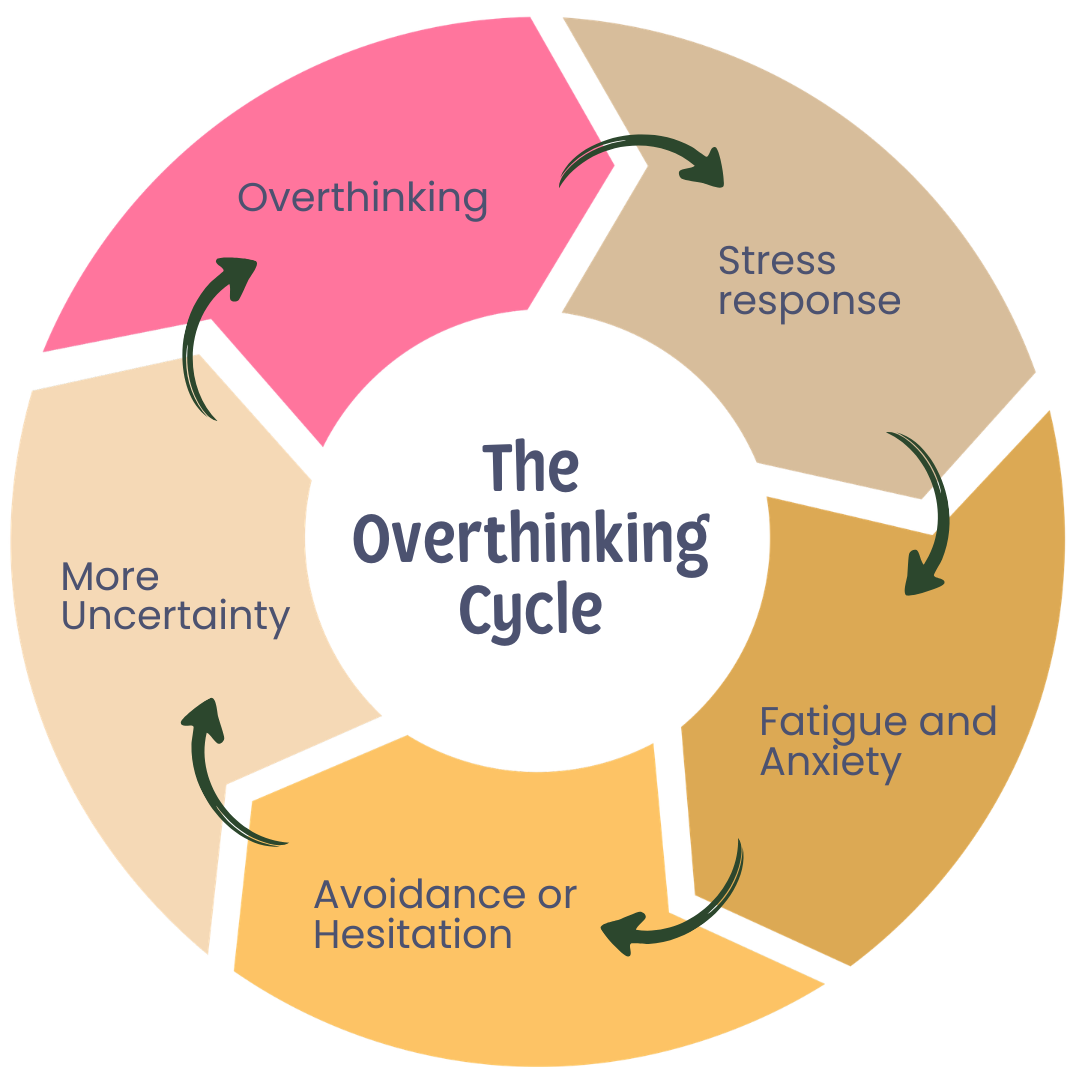
The brain is designed to detect and respond to threat. When you repeatedly focus on potential problems, unresolved conflicts, or imagined outcomes, your brain interprets those thoughts as important and possibly dangerous.
Neural pathways associated with stress become reinforced through repetition. The more frequently you rehearse a stressful scenario, the more automatic the response becomes. Your nervous system begins to anticipate a threat even in neutral situations.
Looped thinking keeps the stress response active because the brain does not receive a clear signal that the issue has been resolved.
Neuroscience helps explain why these patterns become automatic over time. From a neuroscience perspective, repeated rumination strengthens neural circuits associated with threat detection. Rick Hanson discusses this in his book: Hardwiring Happiness. The amygdala becomes more reactive, while the prefrontal cortex, responsible for rational evaluation and emotional regulation, can become less efficient under chronic stress. This imbalance explains why overthinking can feel automatic and difficult to interrupt.
How to Calm the Physical Effects of Overthinking
Because overthinking activates the body, calming it requires more than intellectual insight. You must regulate the nervous system directly.
1. Breathing Exercises
Breathing regulation is one of the most effective tools. Slow, controlled breathing with longer exhales signals safety to the brain and helps shift the body out of fight or flight. A good practice is the 4-7-8 method, where you inhale for 4 seconds, hold for 7 seconds and exhale for 8 seconds. Try this for 5 rounds, and you will notice a shift in the heaviness of your body.
2. Somatic Grounding
Somatic grounding techniques anchor attention in the present and interrupt mental looping. This could be as simple as splashing cold water on your face or holding an ice cube. By doing this, you activate the mammalian dive reflex, which physiologically slows your heart rate.
3. Thought Interruption
Thought interruption techniques are also effective. When you recognize repetitive rumination, deliberately redirect your attention toward movement, structured problem solving, or a time limited reflection session. Pairing interruptions with replacements and redirection help increase the effectiveness of this technique long term.
4. Sleep Routines
Sleep hygiene is critical. When you are tired, your brain’s “cognitive control” weakens, making it much harder to stop automatic negative thoughts from spiraling. Establishing consistent sleep routines and reducing stimulation before bed helps lower cortisol levels. If you have trouble falling or staying asleep, try PMR (progressive relaxation) by tensing and releasing muscle groups from your toes to your face. This physically discharges stored stress.
These strategies help reduce the physical overthinking effects on body systems over time.
When Overthinking Becomes Chronic Stress
There is a difference between normal reflection and chronic rumination. Thoughtful reflection leads to clarity. Chronic rumination leads to repetition without resolution. If you feel tense most days, struggle to sleep regularly, experience persistent fatigue, or notice that your mind rarely feels settled, overthinking may be contributing to chronic stress. Recognizing early overthinking symptoms allows you to intervene before the pattern deepens.
Remember, the more time you spend mentally rehearsing every possible outcome, the harder it becomes to move forward. Once planning starts to replace action, or researching starts to feel productive, even though nothing is actually being completed, it’s time for a shift in behavior. To learn more about the traps that keep you stuck and the mindset shifts to help you follow through, check out How to Actually Finish What You Start. The key is catching the pattern early and gently shifting from endless analysis into small, decisive action.
How Overthinking Impacts Long Term Health and Why Awareness Matters
Overthinking is not just a mental habit. It is a full body experience that activates your stress response, alters your physiology, and affects your long term well being. The ongoing overthinking effects on body and brain function accumulate when rumination becomes chronic.
Understanding the long term physical effects of overthinking allows you to intervene earlier. When stress hormones remain elevated for extended periods, the cumulative impact affects cardiovascular health, metabolic regulation, immune resilience, and cognitive clarity. Awareness is preventative.
The goal is not to eliminate thinking. It is to recognize when thinking stops being productive and starts being harmful. By understanding how your thoughts influence your body, you gain leverage. You can regulate your nervous system, interrupt harmful loops, and reduce the long term physical cost of chronic stress.
Is Overthinking Good for Your Brain?
Many people ask: is overthinking good for your brain? The answer is nuanced. While deep thinking can be beneficial, chronic rumination is not. It’s important to understand the difference.
Analytical reflection can improve decision making, enhance planning, and prevent repeated mistakes. The brain benefits from thoughtful evaluation when it leads to insight or action. However, if thinking turns into a chronic loop, or rumination without a tangible outcome, it can become dangerous.
Rumination, or repeatedly focusing on distress without moving toward resolution, increases stress and reduces cognitive flexibility. Instead of generating new solutions, the brain loops through the same material. Long term rumination is associated with increased anxiety, reduced concentration, and cognitive overload.
When the brain is constantly scanning for potential problems, it has fewer resources available for creativity, learning, and strategic thinking. Your mind and body are connected. When you change one, you influence the other.
Frequently Asked Questions About Overthinking
Can overthinking cause physical symptoms?
Yes. Overthinking activates the stress response, which increases cortisol and stimulates the sympathetic nervous system. This can lead to headaches, muscle tension, digestive problems, fatigue, increased heart rate, and sleep disruption. These are common physical overthinking symptoms.
Why does overthinking make my body feel tired?
Chronic rumination keeps the body in a low grade stress state. Elevated stress hormones and constant cognitive effort drain energy reserves. Over time, this leads to fatigue and burnout.
Is overthinking bad for your brain long term?
Occasional reflection is healthy, but chronic rumination increases stress and reduces cognitive flexibility. Long term stress exposure can impair concentration, memory, and emotional regulation.
Can overthinking cause anxiety symptoms?
Yes. Overthinking often overlaps with anxiety because both activate the fight or flight response. Physical symptoms like chest tightness, rapid heartbeat, and shallow breathing may result from repetitive stress based thinking.
How do you stop the physical effects of overthinking?
To reduce overthinking effects on the body, focus on nervous system regulation. Slow breathing, physical movement, consistent sleep habits, and intentional thought interruption can gradually retrain stress patterns.